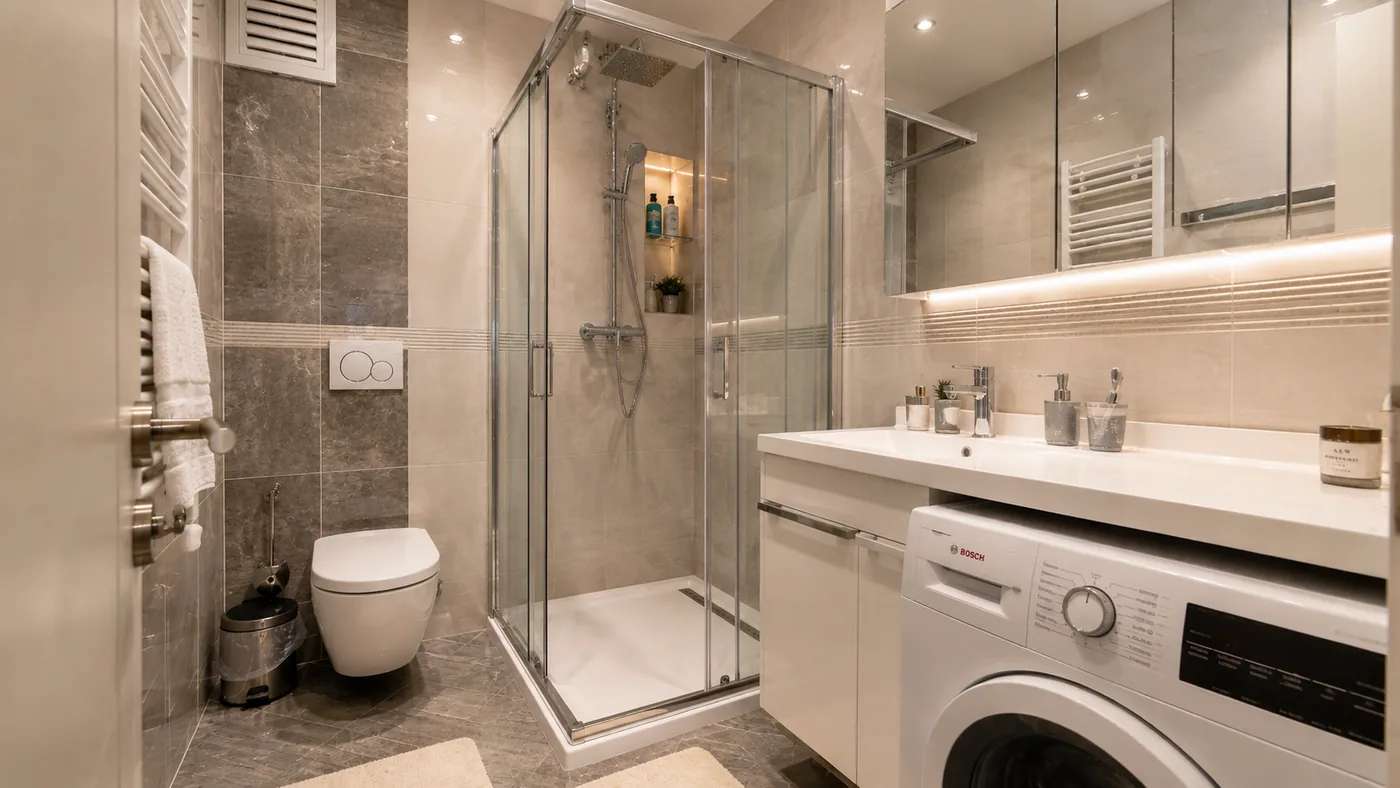
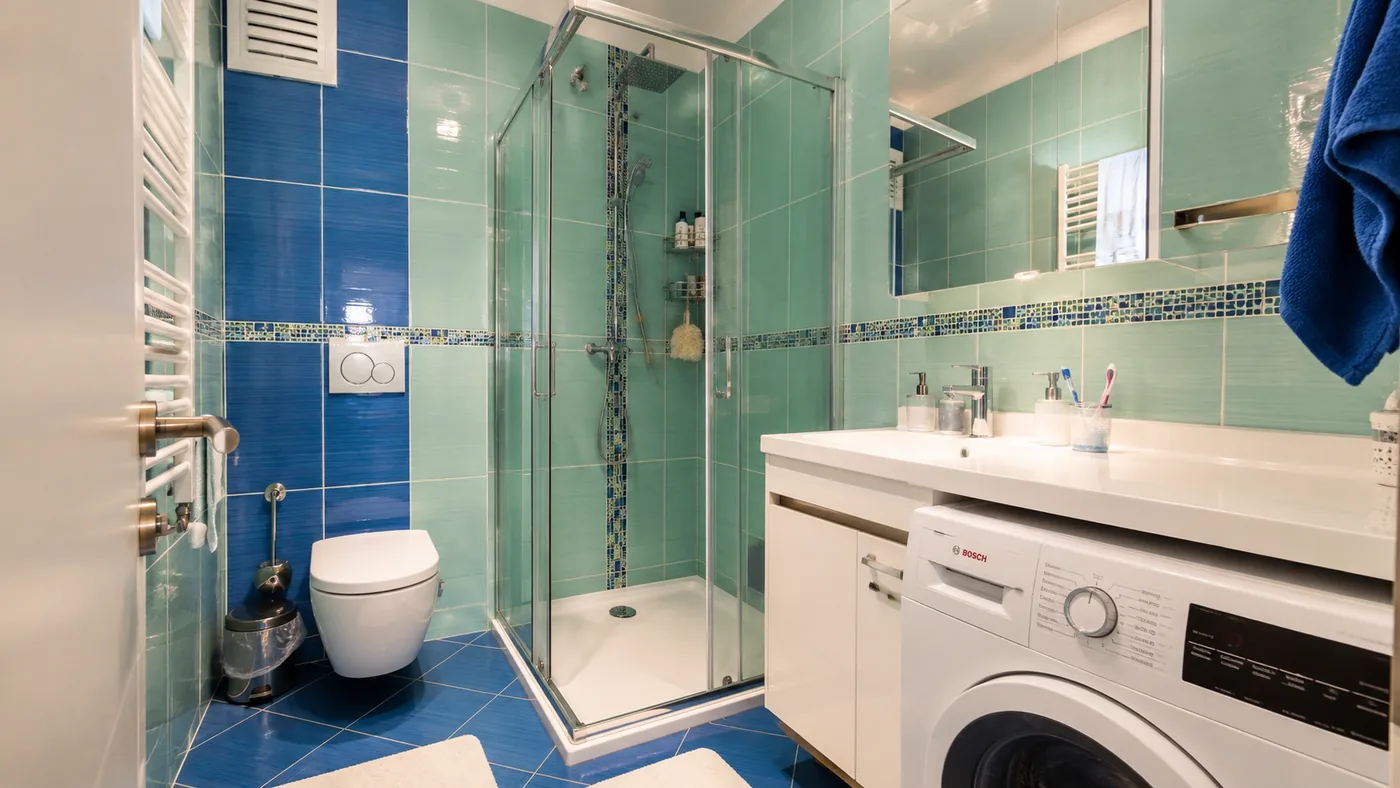
 ↔
BeforeAfter
↔
BeforeAfter
Drag the handle — the original on the left, our design visual on the right.
Renovation cost: what actually sets it?
Everyone who decides to renovate asks the same question first: how much will it cost? There is no honest answer to that over the phone — a renovation isn't a product with a shelf price, it is a piece of work that takes shape as you define its scope. Two projects in the same 120 m² flat can differ threefold and both can be priced correctly. The more useful question is: what do I get for this budget, and what do I postpone? This article sets out the variables that decide renovation cost, the items missing from most quotes, and how to read a price offer — without quoting figures, but leaving the frame clear.
Three variables decide the cost: scope, level, existing condition
Every renovation budget stands on three legs. Scope: what you touch — only surfaces (paint, flooring, cabinet fronts), or plumbing, electrics and walls as well? Level: the class of material and workmanship; between the standard and upper-segment version of the same layout, most line items differ by a factor of two or three. Existing condition: the state the space is in today — if the plumbing in an older building has to be renewed, or the floor is significantly out of level, that work enters the budget whether you asked for it or not. Comparing quotes before these three are defined in writing is comparing apples with pears.
Why the price per square metre misleads
"What's your rate per square metre?" looks practical but means nothing on its own, because a rate can't be calculated until the three variables above are fixed. For the same 100 m², repainting and re-flooring versus a full transformation including services differ by several times. And cost is not spread evenly across the floor area: a 6 m² bathroom can cost more than a 25 m² living room. A rate per square metre is a summary figure that becomes valid only after scope and level are defined — it is the outcome of the conversation, not its starting point.
Where the budget actually goes
In home renovations the money mostly doesn't go where the eye lands. Wet areas — kitchens and bathrooms — are usually the single largest item: small in area, but that is where plumbing, waterproofing, tiling labour, sanitaryware and fittings concentrate. The second largest item in most projects is bespoke furniture and storage. Invisible infrastructure — electrical and sanitary services, floor levelling — is a modest-looking share that cannot be postponed. The rest is shared by paint, doors and windows, lighting, site costs and transport. Knowing this split also tells you where NOT to cut.
The items that don't appear in the quote
What strains a budget is rarely expensive material; it is the items nobody counted. The most commonly forgotten: debris removal and disposal; lift rules and the cost of carrying materials up the stairs; the building's permitted working hours (restricted hours = longer schedule = more labour); accommodation or storage while the work runs; meter and utility registration; the final clean and damage insurance. None of these are luxuries — they are part of the job. Their absence from a quote doesn't make them disappear; it only means you will pay for them later.
Contingency: why 10-15% is set aside
No team can see behind a wall that hasn't been opened. In renovation, surprises are not the exception but the rule: old galvanised pipe, an unwaterproofed wet area, rotten formwork, hidden damp, walls out of square, a non-standard floor-to-ceiling height. That is why roughly 10-15% of the total budget is set aside as contingency from the start; if it isn't spent, it goes into improvements. A budget without it either stops the job at the first surprise or carries on by cutting quality — both cost more. Contingency isn't an expense; it buys decision freedom and schedule.
How to read a price offer
A good offer isn't a price list; it is the frame of the job. Look for: are items listed separately, or does everything sit on one "turnkey" line (one line guarantees a scope argument later); are materials given by brand, model and size, or described with unmeasurable adjectives like "first quality"; is there a list of what is explicitly OUT of scope; are quantities and unit prices visible; is it clear how a change request will be priced; are the handover date and the consequence of delay written down. At mimarsanat a quote is a document that states the scope and the exclusions together — because nearly every dispute grows out of the sentence "I assumed that was included".
Where to save, and where never to
Saving has one reliable rule: never cut the layers that will not be opened again. Waterproofing, sanitary and electrical services, floor preparation, anything touching the structure — money saved there is paid twice a few years later, once for the material and once for the finished work above it. By contrast you can flex freely on anything replaceable later: light fittings, loose furniture, textiles, paint colour, decorative cladding. When the budget is tight, the right move is to reduce the scope, not the quality — a smaller job done properly beats a larger job left half-finished.
Spreading the budget over time: by layer, not by room
If the budget doesn't cover today's scope, the work can be phased — but the logic of phasing is usually set up wrong. "Let's do the living room now and the kitchen next year" means opening the infrastructure twice. The right approach is by layer: the invisible services and the wet areas of the whole space are finished in one go, while paint, furniture, lighting and decoration wait for a second phase. Nothing done gets damaged later, the site isn't set up twice, and the total cost falls. If you plan to phase, say so at the design stage — the project is then structured for it.
Payment plan: what does the money follow?
A sound payment plan follows completed work, not the calendar: the contract defines milestones such as deposit, material order, completion of rough works, installation and handover. For bespoke items, a payment when the order is placed after final measurement is normal — material is bought up front when production starts. What is not normal is a series of requests while the work stands still. When the plan is in writing both sides are protected: one knows the job won't stall, the other knows the payment will come.
The real cost of a renovation comes not from the first figure quoted, but from how clearly the scope was defined and how early the surprises were found. In discovery we go through the space, your goal and your investment range together, and put the scope and the exclusions in writing. To talk through this frame for your own home, just describe the space, its approximate floor area and your goal through the appointment form.
Related service
Shall we talk about your own space? The appointment form takes three minutes.
Let's talk your project →